Festivals as Cosmic Markers
Hindu festivals are not arbitrary cultural celebrations, they are precisely calibrated to specific lunar phases (Tithi), Nakshatras, and planetary positions. Each festival opens a unique energetic window when certain spiritual practices, prayers, and intentions are amplified. Understanding this astrological dimension transforms how we approach these sacred days.
Here are the ten most important Hindu festivals and their astrological significance.
1. Diwali (Deepavali)
When: Kartik Amavasya (new moon of Kartik month, typically October to November)
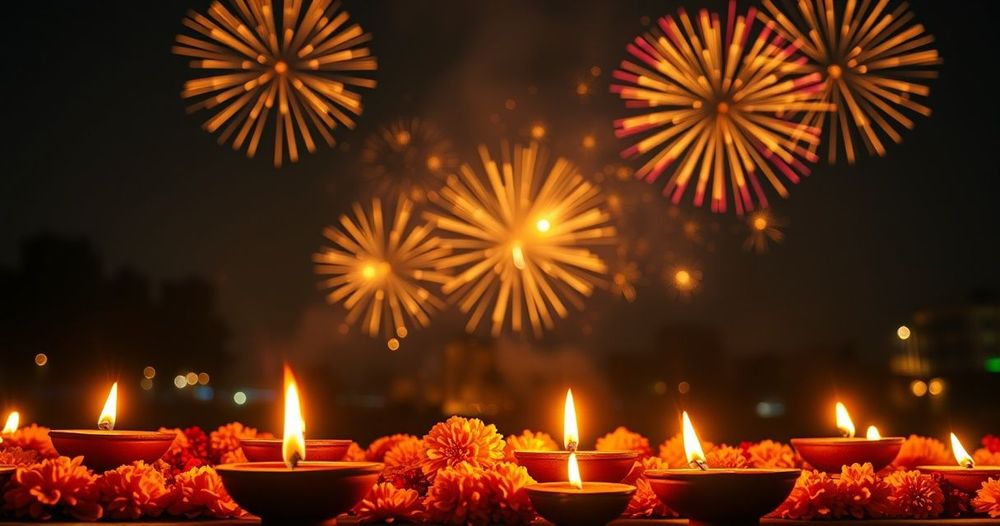
Astrological significance: Diwali falls on the darkest night of the lunar month when the Moon is invisible (Amavasya). This symbolizes the triumph of inner light over outer darkness. Tradition holds that Goddess Lakshmi enters homes that are clean, lit, and welcoming on this night. Astrologically, the new moon in Libra/Scorpio is auspicious for invoking Lakshmi's wealth-bestowing energy.
Rituals: Lakshmi-Ganesha puja, lighting diyas (oil lamps), drawing rangoli, performing Chopda Pujan (worship of account books for merchants).
2. Holi
When: Phalguna Purnima (full moon of Phalguna, typically March)
Astrological significance: Holi is celebrated on the full moon of Phalguna, marking the end of winter and the burning away of negativity (Holika Dahan). The full moon in Leo (Purvaphalguni Nakshatra) amplifies joy, expression, and the playful aspect of divine love (Krishna-Radha).
Rituals: Holika Dahan on the eve, color play (Rang Panchami), special prayers to Krishna and Vishnu.
3. Navratri (Sharad Navratri)
When: Ashwin Shukla Pratipat to Navami (first nine days of waxing Moon in Ashwin month, typically September to October)
Astrological significance: Nine nights honoring nine forms of Goddess Durga. The waxing Moon increases divine feminine energy daily, culminating on Vijayadashami (Dussehra) when righteousness conquers ignorance. Each night corresponds to a different Devi (Shailaputri, Brahmacharini, Chandraghanta, Kushmanda, Skandamata, Katyayani, Kalaratri, Mahagauri, Siddhidatri).
Rituals: Fasting, kanya pujan, Devi Bhagavata path, Garba and Dandiya dance, ending with Dussehra.
4. Krishna Janmashtami
When: Bhadrapada Krishna Ashtami (8th day of waning Moon in Bhadrapada, August to September): when the Moon is in Rohini Nakshatra
Astrological significance: Krishna was born at midnight on the 8th day of waning Moon, with the Moon in Rohini Nakshatra, exactly this combination is what makes Janmashtami astrologically unique. Rohini is the Nakshatra associated with creation, beauty, and divine play (lila).
Rituals: Day-long fast broken at midnight, recitation of Bhagavata Purana, Krishna idol cradling, devotional singing and dancing.
5. Maha Shivratri
When: Phalguna Krishna Chaturdashi (14th day of waning Moon in Phalguna, February to March)
Astrological significance: The night when Shiva and Shakti are believed to have wed, and when the cosmic axis aligns with the planet such that upward-flowing energy is naturally easy. Astrologers consider this the most powerful night of the year for Shiva worship, the Moon is nearly invisible, and the suppression of lunar (mental) energy makes Shiva-consciousness easier to access.
Rituals: All-night vigil, fasting, abhishekam of Shiva linga with milk, honey, ghee, water, and bilva leaves; chanting Maha Mrityunjaya and Om Namah Shivaya.
6. Ram Navami
When: Chaitra Shukla Navami (9th day of waxing Moon in Chaitra, March to April)
Astrological significance: Lord Rama was born on this day at noon in the Punarvasu Nakshatra. The waxing Moon in Cancer (Punarvasu) creates an atmosphere of nurturing, dharmic leadership, embodying the ideal kingly virtues Rama represents.
Rituals: Ramayana recitation, fasting until noon, idol procession, kanya pujan.
7. Ganesh Chaturthi
When: Bhadrapada Shukla Chaturthi (4th day of waxing Moon in Bhadrapada, August to September)
Astrological significance: The day when Ganesha, remover of obstacles, is most easily invoked. The waxing Moon in Virgo amplifies the energies of organization, intelligence, and beginning of new ventures.
Rituals: Installation of Ganesha idols at home and public pandals for 10 days, daily aarti, ending with Visarjan (immersion) on Anant Chaturdashi.
8. Raksha Bandhan
When: Shravana Purnima (full moon of Shravana, typically August)
Astrological significance: Falls on the full moon in Capricorn/Aquarius, when Shravana Nakshatra is often active. Shravana means 'listening', the bond between brother and sister is renewed through the symbolic listening of the protective vow.
Rituals: Sister ties rakhi (sacred thread) on brother's wrist; brother offers protection and gifts; family rituals around Shiva (Shravana is sacred to Shiva).
9. Akshaya Tritiya
When: Vaishakha Shukla Tritiya (3rd day of waxing Moon in Vaishakha, April to May)
Astrological significance: 'Akshaya' means imperishable. On this day, every spiritual or material undertaking is believed to yield eternal benefits. The waxing Moon in Taurus or Gemini, combined with the Sun's exaltation, creates exceptional auspiciousness. Akshaya Tritiya is one of the four most auspicious days of the year and does not require a separate Muhurat for any activity.
Rituals: Gold purchasing, new ventures, weddings, charity, donations, beginning of pilgrimages.
10. Makar Sankranti
When: When the Sun enters Capricorn (Makar), around January 14
Astrological significance: Unlike most Hindu festivals which follow the lunar calendar, Makar Sankranti is solar. It marks Uttarayana, the Sun's northward journey, when days become longer and a new spiritual cycle begins. According to the Mahabharata, dying during Uttarayana grants liberation (moksha). This is why Bhishma waited for Uttarayana before passing.
Rituals: Holy bath in rivers (especially Ganga), donation of sesame and jaggery, kite flying, regional celebrations (Pongal in Tamil Nadu, Lohri in Punjab, Bihu in Assam).
Why Aligning with Festivals Matters
When you observe a festival with awareness, rather than just as a social ritual, you tune into a cosmic frequency the Rishis identified millennia ago. The energy of that specific Tithi-Nakshatra-Vaar combination flows naturally; you do not have to generate it. Practices done on these days carry compound spiritual returns.
How AstroSamay Helps
The Panchang screen in AstroSamay shows you when each festival falls in your timezone, with rich descriptions of the rituals, significance, and recommended mantras. The Notification feature can remind you a day before so you can prepare. Over time, you find yourself living in rhythm with the Vedic calendar, and life acquires a depth and sacredness that the Gregorian calendar alone cannot offer.
Festivals are how the ancient Rishis encoded a year of spiritual practice into the rhythm of culture. Honor them with awareness, and they will transform you season by season.