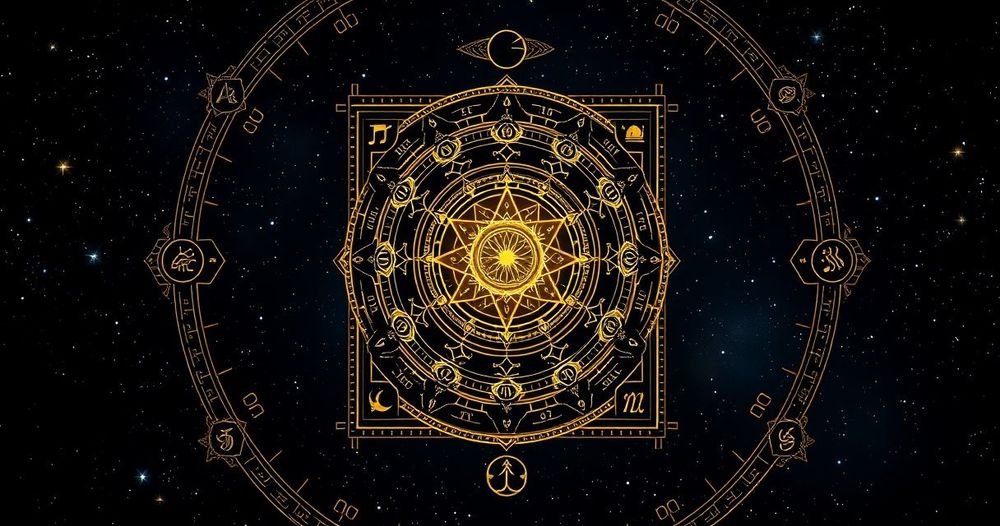
What is a Kundli?
A Kundli (also called Janma Kundli, Janam Patrika, or Vedic Birth Chart) is a divine snapshot of the cosmos at the moment of your birth. In Vedic astrology, this celestial map captures the precise positions of the Sun, Moon, planets, and lunar nodes (Rahu and Ketu) relative to twelve zodiac signs and twelve houses, and it is believed to encode the karmic blueprint of your present life.
Unlike a horoscope reading you might find in a newspaper, your Kundli is uniquely personal. It is calculated using three essential pieces of information: your date of birth, your exact time of birth, and the geographical location of your birthplace. Even a difference of a few minutes can shift the entire chart, especially the rising sign (Lagna), making accuracy crucial.
The 12 Houses of a Kundli
A Kundli is divided into twelve houses (Bhavas), each representing a specific area of life:
1. First House (Lagna): Self, personality, body, appearance 2. Second House: Wealth, family, speech, food 3. Third House: Siblings, courage, communication, short journeys 4. Fourth House: Mother, home, property, education foundation 5. Fifth House: Children, creativity, romance, past life merits 6. Sixth House: Enemies, debts, diseases, daily work 7. Seventh House: Marriage, spouse, partnerships, business 8. Eighth House: Longevity, transformation, occult, inheritance 9. Ninth House: Dharma, fortune, father, higher learning, pilgrimage 10. Tenth House: Career, profession, social status, karma 11. Eleventh House: Gains, friends, elder siblings, aspirations 12. Twelfth House: Losses, expenditure, moksha, foreign lands
When a planet sits in a particular house, it influences the affairs of that house, for example, Jupiter in the 10th house indicates dharmic success in career.
The Lagna: Foundation of Your Chart
The Lagna or Ascendant is the zodiac sign rising on the eastern horizon at your birth. It is the most important factor in Vedic astrology because it anchors the entire house structure. Two people born on the same day but at different times will have different Lagnas and therefore very different life paths.
Planets and Their Influences
Nine celestial bodies (Navagrahas) shape your Kundli:
- Sun (Surya): soul, ego, father, authority
- Moon (Chandra): mind, emotions, mother, intuition
- Mars (Mangal): energy, courage, siblings, conflict
- Mercury (Budh): intellect, communication, learning, business
- Jupiter (Guru): wisdom, dharma, fortune, children
- Venus (Shukra): love, beauty, comfort, art, marriage
- Saturn (Shani): discipline, karma, longevity, hardship
- Rahu: desires, foreign elements, illusion, sudden gains
- Ketu: detachment, spirituality, past-life impressions, moksha
Divisional Charts (Varga Kundlis)
Beyond the main birth chart (D-1 or Rashi chart), Vedic astrology uses 16 divisional charts called Varga Kundlis. Each focuses on a specific life area: D-9 (Navamsha) for marriage, D-10 (Dashamsha) for career, D-7 (Saptamsha) for children, and so on. Reading these in combination provides surgical precision.
Why Your Kundli Matters
A correctly read Kundli can illuminate:
- Strengths to nurture and weaknesses to work on
- Auspicious periods (Dasha) for marriage, career, education
- Hidden doshas (afflictions) like Mangalik, Kaal Sarp, or Sade Sati
- Compatible partners through Guna Milan
- Career paths aligned with your inner nature
- Remedies (mantras, gemstones, charity) for challenging planetary periods
How AstroSamay Calculates Your Kundli
Our app uses the Swiss Ephemeris, the same astronomical engine used by professional Vedic astrologers worldwide, to compute your chart with sub-second accuracy. You enter your birth date, time, and place once, and we generate not just the Rashi chart but all 16 Varga Kundlis on demand, with interpretations rooted in classical texts like Brihat Parashara Hora Shastra.
Understanding your Kundli is the first step on a lifelong journey of self-knowledge. Begin with the Lagna, observe the planet placements, and let the timeless wisdom of Jyotish guide you toward your highest dharma.