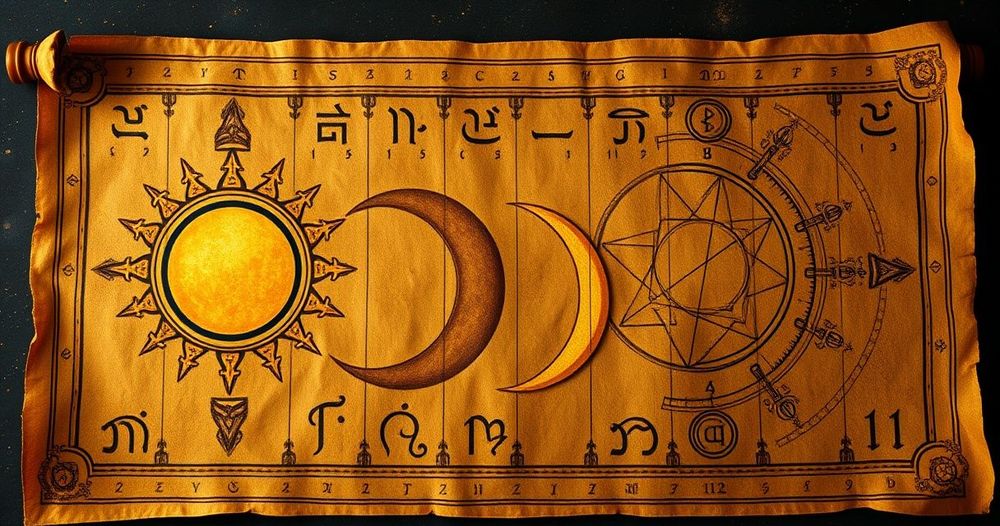
What is Panchang?
Panchang (literally 'five limbs') is the traditional Hindu calendar used for centuries to determine auspicious times, festivals, and daily life decisions. Unlike the Gregorian calendar, which counts only days and months, the Panchang weaves together five astrological elements that change every day. Together they reveal the spiritual quality of any moment.
From choosing a wedding date to starting a new business, from beginning a fast to performing a puja, the Panchang has guided Indian civilization for over 3,000 years.
The 5 Limbs of Panchang
1. Tithi (Lunar Day)
A Tithi is the time taken by the Moon to gain 12° on the Sun in its orbit. There are 30 tithis in a lunar month, 15 in the bright fortnight (Shukla Paksha, waxing Moon) and 15 in the dark fortnight (Krishna Paksha, waning Moon). Each Tithi influences specific activities; for example, Ekadashi (11th tithi) is dedicated to fasting and Vishnu worship, while Amavasya (new moon) is for honoring ancestors.
2. Nakshatra (Lunar Mansion)
The Nakshatra is the lunar mansion the Moon currently transits. Each of the 27 Nakshatras has unique qualities and presiding deities, making certain days favorable for marriage, travel, learning, or starting new ventures.
3. Yoga (Auspicious Combination)
Yoga is calculated from the combined longitudes of the Sun and Moon. There are 27 Yogas, each lasting roughly one day. Some Yogas (like Siddha and Shubha) are highly auspicious; others (like Vyatipata and Vaidhriti) are best avoided for important work.
4. Karana (Half-Tithi)
A Karana is half of a Tithi, there are 11 Karanas, of which 7 rotate cyclically and 4 are fixed. Karana influences the success of short-term activities. For instance, the Vishti (Bhadra) Karana is considered unfavorable, while Bava and Balava are auspicious.
5. Vaar (Weekday)
The Vaar is the weekday, ruled by one of the seven classical planets:
- Sunday (Ravivar) - Sun: leadership, government
- Monday (Somvar) - Moon: emotions, mother, water
- Tuesday (Mangalvar) - Mars: courage, warfare, surgery
- Wednesday (Budhvar) - Mercury: communication, education, trade
- Thursday (Guruvar) - Jupiter: wisdom, dharma, prosperity
- Friday (Shukravar) - Venus: love, art, luxury
- Saturday (Shanivar) - Saturn: discipline, justice, longevity
Each weekday is favorable for specific activities aligned with its ruling planet's qualities.
Auspicious Times in the Panchang
Beyond the five limbs, the Panchang includes specific time windows:
- Abhijit Muhurat: the 8th muhurat around solar noon, generally auspicious for all activities
- Brahma Muhurat: 96 to 48 minutes before sunrise, the holiest time for meditation and study
- Amrit Kalam: auspicious moments derived from the Nakshatra
Inauspicious Times to Avoid
Equally important are periods to AVOID:
- Rahu Kalam: a daily 90-minute window ruled by Rahu, different for each weekday
- Yamaganda: another inauspicious period that rotates daily
- Gulika Kalam: Saturn's son Gulika's window, best avoided for new ventures
- Vishti (Bhadra) Karana: considered malefic for auspicious work
How to Use Today's Panchang
1. Morning rituals: Check the Tithi and Nakshatra to align meditation, japa, or puja 2. Important decisions: Schedule meetings, signings, or travel during auspicious Muhurats 3. Avoiding ill timing: Note Rahu Kalam and avoid initiating new work during it 4. Festivals & vrats: The Panchang tells you which fasts and festivals are observed today 5. Auspicious purchases: Buy gold on Pushya Nakshatra, vehicles on Rohini, etc.
AstroSamay's Live Panchang
AstroSamay calculates your Panchang in real-time using your current location, since sunrise, sunset, and consequently all muhurats depend on geography. Whether you are in Mumbai, Bangalore, or San Francisco, the Tithi end-times and Rahu Kalam will be precisely localized to your city, eliminating the guesswork of using a generic North-Indian almanac.
Understanding the Panchang transforms how you experience time. Instead of treating days as identical, you begin to notice their unique flavors, and align your most important actions with the cosmic rhythm.